dimanche 21 février 2010

Class 4: Generation Y, Web 2.0: Social Networking, User Generated Content


MM2 Class 4: Generation Y, Social Networks, User Generated Content

There are many Optional exercises in this chapter. You can do them in class if you would like, but it might be better to consecrate your class time to the required work and do the optional work at home.


Discussion of Tesser article and chart: (15 minutes)

- When were people from Gen Y born? What different terms describe these people?

- Who were their parents? What characterizes these people?

- What generation comes between these two?

- What events shaped these different generations?

- What are some characteristics about Generation Y:

How can these be helpful for a job? How can they hinder a job (or work environment)?

- What kind of media do they consume and how often?


From what you have read, do YOU feel like you are part of Generation Y?


Optional information: find out some information about World Values: http://www.worldvaluessurvey.org/


------------------

The Typical Gen Yer or Millennial: Look at the first picture in this blog: http://www.masternewmedia.org/media/media-analysis/DeLoitte-US-media-survey-2007-usage-and-preferences-20070928.htm

- How many young people “Multi-task” while watching TV? Does this number seem low or high to you?

- Is the picture an exaggeration or not? Explain briefly.


(Optional: this website has other interesting information about user-generated content as well as information about cell phones as entertainment.)


(Optional: In Exalead Images, or other site, find a picture on the internet that typifies a Millennial for you)


The Eurosocialist Blog (an informal, first person reflection on politics) speaks about Generation Y from her own perspective. http://www.eurosocialist.eu/category/generation-y/

- In the July 1st 2009 post, read the second paragraph about her childhood. Is this like yours? How is it the same or different?


(Optional: In the Eurosocialist Blog, find the qualities that define members of Generation Y – in the blue boxes of the 10 July 2009 post. Do they correspond to what you learned in the Tesser article?)


---------------------------

Millennials in the workforce. There are more and more people from Generation Y joining the workforce these days, so the workplace has to adapt.

- What are the names given to categories of the Workforce Millennials Field Guide by BNET? http://www.bnet.com/2403-13059_23-202118.html?tag=content;col1 (click on “View Guide” and go through the 5 different profiles).

(Optional question: What category are YOU in?)


- What are some hard issues facing Generation Y in the future?

http://blogs.bnet.co.uk/sterling-performance/2009/07/30/poor-generation-y-me/

(Optional: http://blogs.bnet.com/entry-level/?p=1684 )

-------------------------------------

How have millennials been involved in Politics?

“Youth Turnout…”

http://thecaucus.blogs.nytimes.com/2008/11/05/youth-turnout-up-by-2-million-from-2004/

- How many youths voted in the 2008 presidential election?

- How much of an increase was this from 2004?

- Can you find the overall percentage for the youth vote from 2004 and 2008?

- Near the end of the article, find out how many people were “friend” (or “fans”) of Obama on Facebook.


---------------------------------------

Social Networking:

- Look at the statistics presented in this survey by IFOP. What three social networks are most popular in France?


- Where is the social networking site Orkut most popular? What company owns this social network?


- What is the name of Google’s new social network? Will it be a serious challenger to Facebook? Why? Why not?


- What are two very popular professional social networks (one from the US – hint, the name starts with an “L” – and one French whose name starts with a “V”)? Find the American one on this site. http://www.sitepoint.com/blogs/2009/07/28/social-networking-sites-for-business/

How many members do each have?


(Optional: What tips can you find about Non-Virtual Face-to-face Networking on this website? http://www.sitepoint.com/blogs/2009/07/24/face-to-face-networking/ What other tips would you give?)

----------------------------

What is user generated content?

- Why might user-generated content be associated with Millennials?

For the answer, go to this website: http://demicooper.com/blog/2008/12/26/millenials-14-25-year-olds-watch-less-tv-more-streaming-video-but-respond-to-physical-media/

Find out the general trend here. The exact statistics and numbers are not important.


(HELP: to find a specific word in a document, type Control+F and enter the word)


Now investigate further about User-Generated Content.

- What is Current TV? http://current.com/

- What is Digg and how does it work? (briefly) www.digg.com . Check out the latest “top stories” in the technology section.


----------------------------------------

HOMEWORK:

Work on your Group Projects which are due during the class period just after the holidays. Have a good week.

dimanche 14 février 2010

Class Three: Virtual communities & Rheingold Article


Intro: Assigning group projects. Make sure that your names and your subject are written on the sign-up sheet that is passed around in class.

PART ONE: Discussion of Rheingold article

Cooperation Quiz – (10-15 minutes)
In teams according to your row, assemble the answers to the following questions on ONE piece of paper with all of your names on the top. You do not need to write out full sentences. One grade for the team. Bonus participation points for the team that answers first and best.


Rheingold – Virtual Communities
1. How much time did Rheingold spend on the net?

2. What kinds of online activities did Rheingold participate in?

3. When the WELL began, how many people were connected to it?

4. What is Rheingold’s definition of a Virtual Community?

5. According to Rheingold, how can computers and telecommunications change our future?


Discussion: (10-15 minutes)

Do you agree with Rheingold’s definition of a community? Why or why not?

How different was the Net at that time from today’s Internet? What are the similarities or differences (in concrete examples)? Do you think that the Net is now controlled by big business or government?


Part Two: COMMUNITIES ON THE NET


A: First, find out the answers for these questions applied to each item (only a short answer is necessary):

What are the following acronyms or words? - What kind of personal interaction happens with each? - When did each begin? - Who was the creator or an important early user? (this question does not apply in all cases) - Which of these were created before the WWW?

Facebook IRC Listserv (also called Mailing Lists) MMOG (e.g. Everquest or Doom, MMORPG)

MUD

P2P file sharing (e.g. Napster, e-mule)
Second Life
Sourceforge
Twitter

USENET (Suggestion: find the article online called “I remember USENET”)


B: Then, divide these things into two categories: 1) Early Communities on the Net before the invention of the WWW, 2) Today’s communities on the net. How many still exist?

C: Finally, ask yourself (think about this for the final exam…):

- How or why can these means of communication be considered “communities” (or not)?

- What links or connections do the people who use these sites create?

- Are these connections based on online experiences or offline experiences?

- What other trends in virtual communities do you know and/or participate in?


Helpful sites:
Here are some sites that MAY help you in this research: (As a challenge to yourself, try NOT to use Wikipedia for your research. Use other sites too!)
http://www.yourhtmlsource.com/starthere/historyofthenet.html
http://www.dmoz.org/Computers/Internet/History/
http://www.essortment.com/hobbies/internethistory_sjnd.htm
http://commposite.org/v1/2000.1/articles/latzko3.htmhttp://www.livinginternet.com/
http://www.ludd.luth.se/mud/aber/mud-history.html
http://www.vissing.dk/Internet.History/ihistlist.html


HOMEWORK:


- Read the article Generation Now, by Tom Tresser: http://www.tresser.com/pdf/writing/Generation_Now_7-07-rev.pdf

Among many other questions that will be asked, try to answer about the following questions. When were people from Gen Y born?

What are some general characteristics about Generation Y (temperament, personality…)

How can these (above) traits be helpful (or not helpful) for a job?


- Begin working on your group projects.

Optional information (to do outside of class): Watch internet video interview with M. Castells on http://globetrotter.berkeley.edu/people/Castells/castells-con0.html

Optional Information: find out how hackers continue to work for the safety and progress of the Net at the annual Black-Hat Hacker Conference.
http://www.blackhat.com/

dimanche 7 février 2010

Class Two: History of Computers and the Internet


There is a lot of work to do today, so get ready to work quickly and independently!!


Part One: 15 minutes


Review of Reading: Discussion (You do not need to write up your answers but, you must KNOW the information for the “partiel final” on the last day of class)


Alberganti: L’internet l’an 01

What was the first word sent over the internet?

What was this network called at the beginning? Why?

What four universities were involved?

Why was the concept of the “Intergalactic Network” by Licklider important to the development of the internet?

What is the Packet Switching idea by Leonard Kleinrock? How did this help?

What was the name of the network in France developed by Pouzin?

Why was the French public behind in its adoption of the Internet?


Castells: Le développement d’internet…

What discipline does Manuel Castells do research in?

What is his precision on the definition of a “hacker”?

What is the difference between a hacker and a cracker?

In what other domains does he see the “hacker ethic” or “hacker culture”?

How does he say that society influences technology?

------------------------------

Part Two: divide your time between sections A and B


History of the internet and the PC (sections A and B)


Try using these different search engines instead of (or in addition to) Google.

Here is the link to Exalead: http://www.exalead.com/search/

Here is the link to Yahoo! http://www.yahoo.com

Ask dot com: http://www.ask.com

Dogpile Meta Search: http://www.dogpile.com

All the web: http://www.alltheweb.com

Look below for more links to informative sites about the early days of the Internet.


Section A ------------------------


Find out what these names correspond to in the history of computers and the internet (share the work and answers with your classmates if necessary): You do not need to know everything about this person or thing, only its relationship to computers or internet.


Ada Lovelace

(approx what year? What was her partnership with Charles Babbage? )

Linus Torvalds

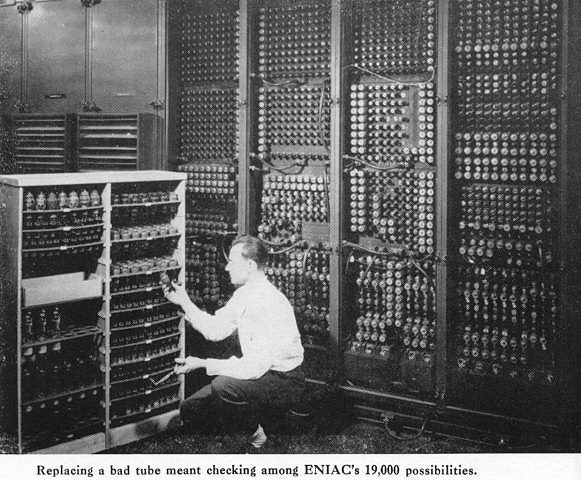
ENIAC

ICQ

Usenet

IBM

Steve Wozniak

ATARI


Section B ------------------------


Important Dates for computers and the internet: Answer the questions with the appropriate date. Then, add up the total number to see if you have the correct answers.

1) When did William Schockley invent the transistor?


2) When was email invented? (Choose the earlier date if you find any differences)


3) When was Chat – Internet Relay Chat – invented?


4) When was the World Wide Web introduced to the Internet? (Choose the earlier date if you find any differences)


5) When was the first popular Browser introduced? (the answer begins with an “M”)


6) When was the P2P program Napster introduced to the internet to share Mp3 files?


7) When was the WSIS of Geneva?


Total = 13,890


Related questions:


1) How did the transistor change computers (and other electronic devices)?

2) Who invented email? Where did he work?

3) What country did IRC first come from?

4) Who invented the WWW? Where did he work? How did the WWW change the way people interacted with the internet?

5) What was the name of this first popular Browser? What other browser did its inventors create later?

6) Who invented this P2P program? How old was he? When did this free service stop and why?

7) Why was the WSIS important for the development of the Internet?


Part Three: HOMEWORK

Read the Introduction chapter to Howard Rheingold’s The Virtual Community. http://www.rheingold.com/vc/book/

You can read it in French if you would like (translated by Lionel Lumbroso). http://www.well.com/user/hlr/texts/VCFRIntro.html

Please let me know if it is translated into your language (for ex, Spanish, German, Romanian, Japanese) and available online.


Some references and more information ---------------------------------


Walt Howe’s Internet Learning Center http://www.walthowe.com/ilrntree.html

Video of the History of the Internet: http://vimeo.com/2696386 A bit technical, but simplified and an interesting look at the international aspects of networked communication.

http://www.youtube.com/watch?v=qv0XCaUkfNk&feature=related Internet Explained.

http://www.youtube.com/watch?v=8DA-jA17gy4&feature=related How internet works.

History of Arpanet/Internet show 04 http://www.youtube.com/watch?v=ECMNddHEbjY